Monday, June 29, 2026

A little bird told her: scientist wins $100,000 prize for decoding birdsong

via The Guardian by Ian Sample Science editor

920.jpg?width=1200&height=630&quality=85

Julie Elie worked out how zebra finches announce who they are, what they are doing and use individual signatures

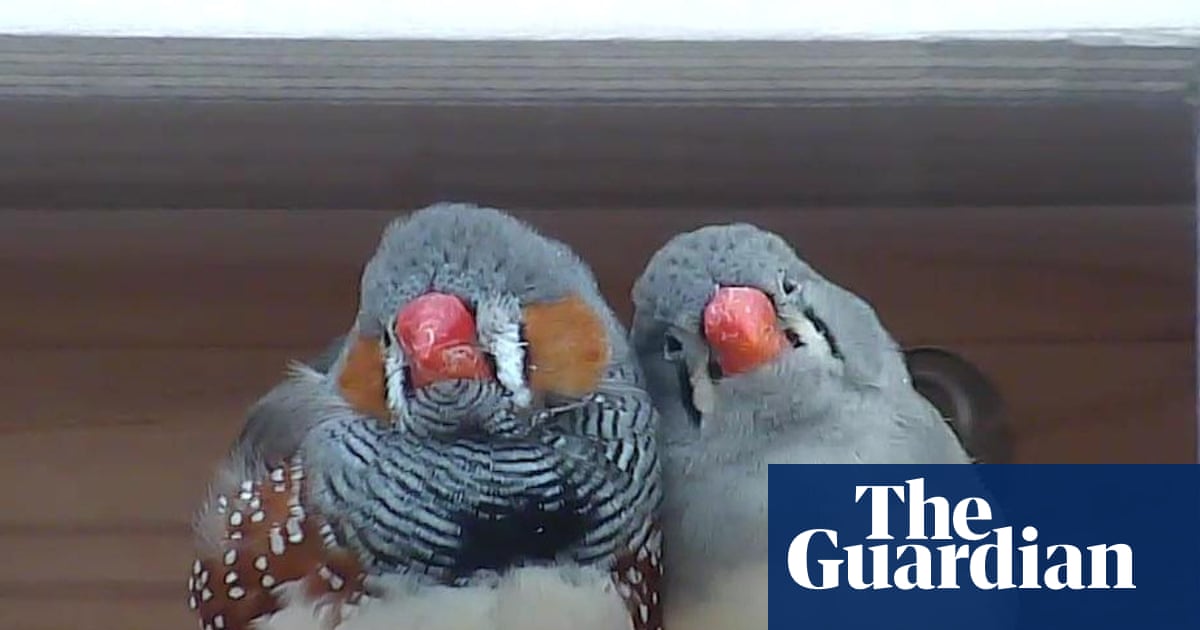
A scientist who decoded the vocalisations that a bird uses to communicate has won a $100,000 prize for making progress towards a world in which humans can talk to the animals – without being met with a blank response.

Dr Julie Elie at the University of California, Berkeley, was awarded the 2026 Coller-Dolittle prize for two-way interspecies communication after working out the 11 core calls in the zebra finch vocabulary and their meanings.

Continue reading...

Monday, June 22, 2026

Is it true that … beards are unhygienic?

via The Guardian by Kate Lloyd

919.jpg?width=1200&height=630&quality=85

People assume that those with facial hair are more likely to harbour bacteria on their faces than the clean-shaven – but the truth is more tangled

The idea that beards are dirtier than clean-shaven faces has been floating around for decades, says John Tregoning, professor of vaccine immunology at Imperial College London. There is even research that shows people perceive bearded men as less hygienic: one study found restaurant customers rated waiters with facial hair as dirtier. Science doesn’t necessarily back that up, though.

One of the earliest studies on the subject, published in 1967, looked at how much bacteria could be recovered from men’s faces after being artificially sprayed on to their skin. Researchers compared washed and unwashed faces, both with and without beards. The dirtiest combination wasn’t with a beard: most bacteria was recovered from unwashed clean-shaven faces, followed by unwashed bearded faces, washed bearded faces and finally washed clean-shaven faces.

Continue reading...

Friday, June 19, 2026

Weatherwatch: Saharan dust drops microorganisms into European soil

via The Guardian by David Hambling

4640.jpg?width=1200&height=630&quality=8

Scientists are examining how ‘blood rain’ affects soil microbiome, with Portuguese vineyards a particular focus

Dust events, when thousands of tonnes of fine sand whipped up from the Sahara are dumped over Europe, are becoming more intense. These sometimes produce “blood rain” that leaves visible red streaks, and while generally harmless, the dust is not sterile but brings a freight of microorganisms.

One big concern is how imported microbes may affect the soil microbiome and impact agricultural fertility and crop yield. Southern Portugal lies along one of the main deposition routes for Saharan dust, and the effect on vineyards in particular is a growing concern. A team from the University of Lisbon carried out genomic mapping of microbes in dust samples from 2022’s Storm Celia.

Continue reading...

Thursday, June 18, 2026

'On Eagle's Wings' turns 50: The journey behind the song that has consoled the world

via by Camillo Barone

Joncas%20Eagles%20Wings%20turns%2050%201

Michael Joncas wrote "On Eagle's Wings" during a moment of private grief. Five decades later, the hymn has become one of the most recognizable religious songs in the English-speaking world.

Monday, June 15, 2026

Dutch children are unusually happy and healthy. Is it because of the Avondvierdaagse?

via The Guardian by Hannah Docter-Loeb

5150.jpg?width=1200&height=630&quality=8

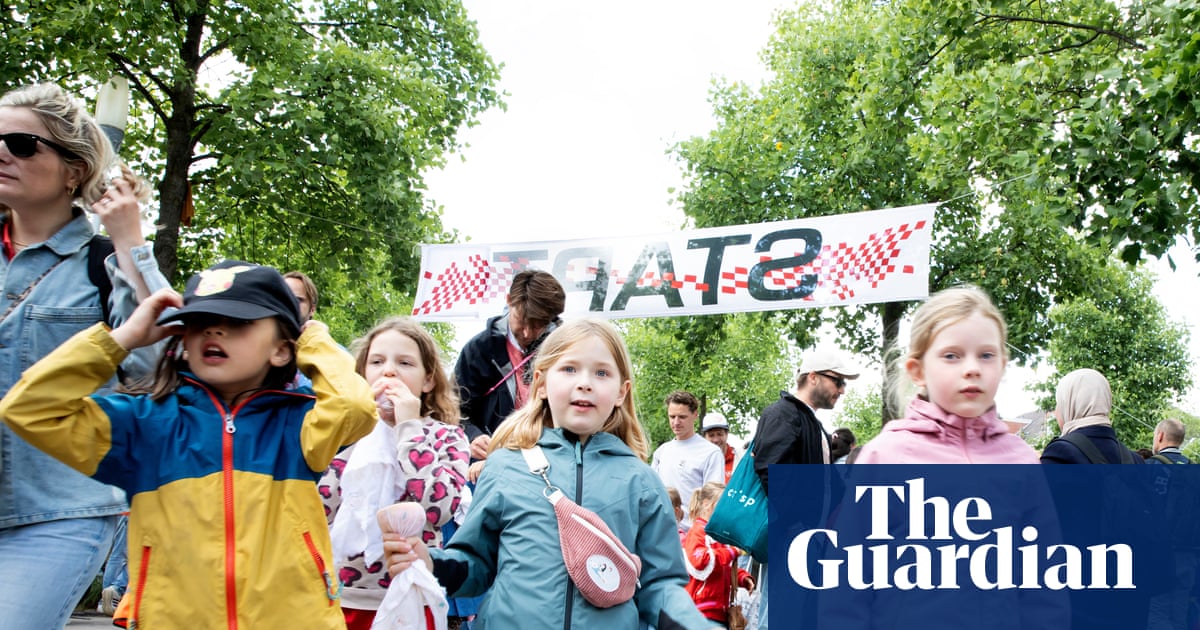
Once a year, Dutch kids, parents and teachers take part in a walking festival, heading out for four nights in a single week to explore their neighbourhoods, exercise and make friends. It’s a tradition that seems to be genuinely transformative

I shouldn’t have been surprised that the rain didn’t stop the Dutch kids. All day it had been thunderstorming, and the forecast didn’t look so great for the evening. And yet at 5pm, hundreds of kids started arriving – many by bike – with their parents to Amsterdam’s Westerpark, a beloved city park that caters to a more residential area of the capital. Today, it functions as a starting point: volunteers coordinate registration, and groups of children gather, decked out in raincoats and eager to embark on either a 5km or a 10km excursion around the surrounding neighbourhoods.

It’s the second night of Avondvierdaagse (which literally means “four-day evening walk”) , organised by a group of neighbourhood volunteers. It’s not a race, but if children complete every night, they get medals, a bouquet of flowers and, if they’re lucky, a lot of sweets. It’s not just Amsterdam; across villages, towns and cities in the Netherlands, hundreds of thousands of Dutch people are doing the same: every year, kids spend four evenings in early summer exploring their neighbourhoods with their school friends and parents as part of the Week van de Avond4daagse. Some places had celebrated earlier; others were walking the following week. A variation of the tradition has even made its way to Suriname, one of the Dutch former colonies. There are also four-day cycling and swimming events. According to the Royal Dutch Walking Association (KWbN), which helps coordinate the events, half a million people take part every year, in 700 locations across the country, powered by tens of thousands of volunteers.

Continue reading...
Friday, June 12, 2026

Amazon owns up to using 2.5bn gallons of H2O in its bit barns last year

230800.jpg?imageId=230800&x=0&y=0&cropw=

Amazon says its datacenters used about 2.5 billion gallons of water last year, but claims that's far less than rival hyperscalers and that it remains on track to become "water positive" by 2030. In a blog post, the digital tat bazaar and cloud computing biz says the 2.5 billion gallon figure covers its entire global datacenter footprint for 2025. It downplayed the number by comparing it to the volume of water Americans - a country of 350 million people - used on lawns and gardens over the same period. Amazon disclosed water usage of 0.12 liters per kilowatt-hour (L/kWh) at its data facilities, and claimed Microsoft used 0.27 L/kWh during 2025, while Meta's consumption stood at 0.19 L/kWh in 2024 and Google was the thirstiest at 1.15 L/kWh during the same year. The Register has asked Microsoft, Meta and Google to comment. The water usage, we're told, is 75 percent of the way to Amazon's goal - announced in 2022 - of being "water positive" by 2030. It means facilities return more water to the environment than they consume, via measures including rainwater capture or other treating waste water for reuse. The figures come amid growing pushback against datacenter construction in the US. A recent Ipsos survey found most Americans don't want facilities built nearby, citing worries over electricity prices, eyesore buildings, and water-hungry operations. This echoes a 2022 report that found Google datacenters were consuming more than a quarter of all the water used in The Dalles, Oregon. Or, if you'd rather not to blame the industry itself, you could go with the line that Chinese operatives are spreading propaganda over social media, a claim that OpenAI and other interested parties are keen to promote. Whatever the cause of the backlash, the underlying numbers are real: datacenter water use has been climbing for years, driven by the sheer growth in facility numbers and by AI servers, which run hotter and demand more cooling than traditional kit. Water consumption at Microsoft's facilities surged 34 percent to 6.4 million cubic meters in 2022, for example, with generative AI blamed. Making matters worse, many datacenters now in the pipeline in the US are slated for areas already experiencing drought, according to analysis by The Guardian newspaper. Amazon says that its facilities use "free air cooling" about 90 percent of the time, pulling in outside air and flowing it past servers to absorb the heat, with no water involved - though it does resort to evaporative cooling during the hottest weather. But as The Register outlined last year, kicking the water habit completely will be nearly impossible, regardless of what claims the operators may make. ®

Thursday, June 11, 2026

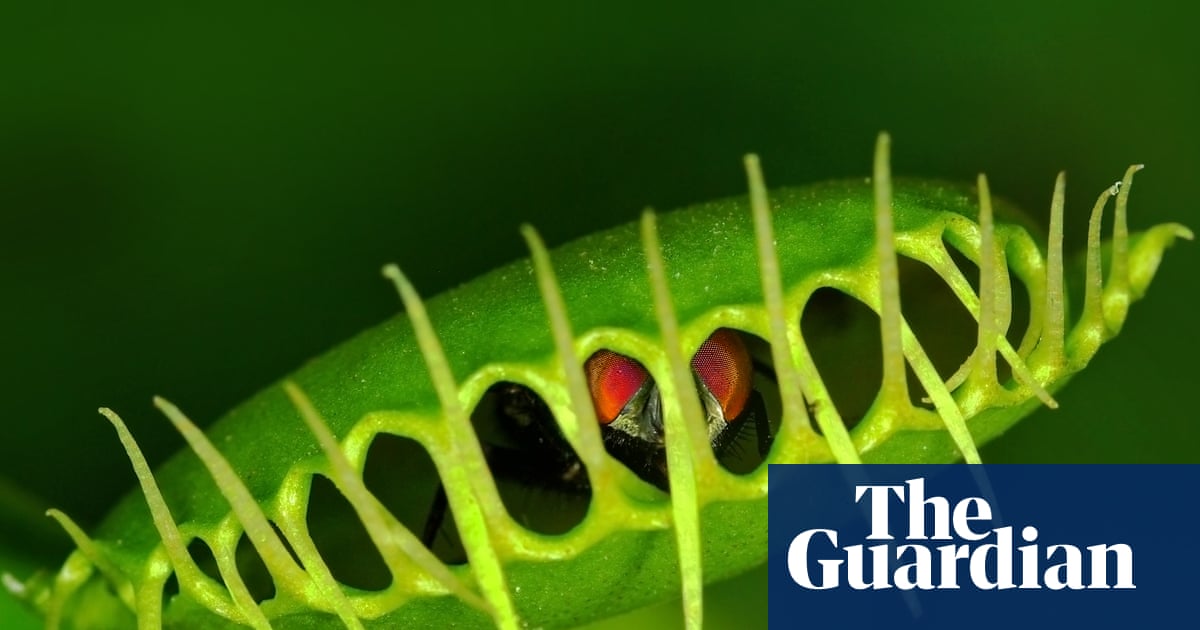
Scientists reveal surprising mechanism behind Venus flytrap’s rapid snap

via The Guardian by Hannah Devlin Science correspondent

3239.jpg?width=1200&height=630&quality=8

Intricate tests show hair-trigger detection causes cells on outer surface of leaf to soften, prompting closure

The Venus flytrap is one of nature’s most impressive predators, luring insects with the intoxicating scent of nectar before capturing them with a snap of its jaw-like leaves.

Now, scientists have revealed the mechanism that allows the carnivorous plant to react with lightning speed, resolving a problem that stumped Charles Darwin and many researchers after him.

Continue reading...

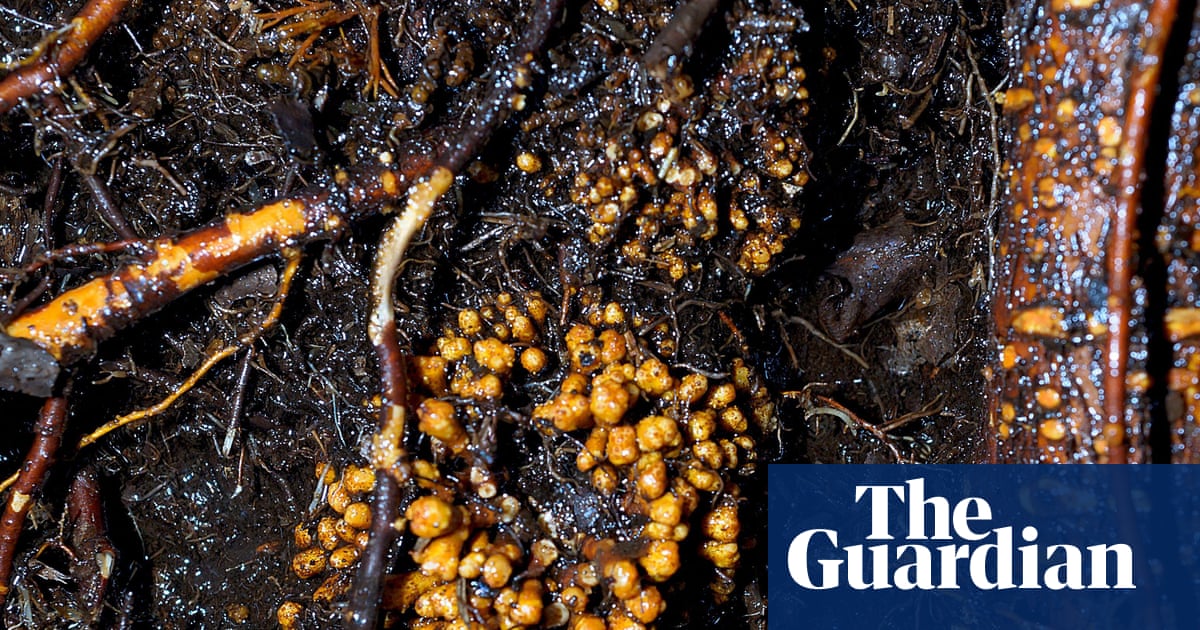
Subterranean fungi networks more than 100 quadrillion km in length, study finds

via The Guardian by Pippa Neill and Patrick Barkham

3103.jpg?width=1200&height=630&quality=8

First ever global mapping of arbuscular mycorrhizal fungi shows scale of hyphal systems that sustain plant life

Our planet’s soils contain enough of the subterranean fungi that sustain plant life and help regulate the climate to stretch from the Earth to the sun almost three-quarters of a billion times, a groundbreaking new study has found.

Arbuscular mycorrhizal fungi are networks of tubular cells called hyphae that sustain life on Earth by forming critical partnerships with more than 70% of plants. The networks, which have been forming for about 475 million years, provide nutrients and water in exchange for the carbon produced by the plants, and help to regulate the climate by drawing carbon into soils.

Continue reading...

Thursday, June 4, 2026

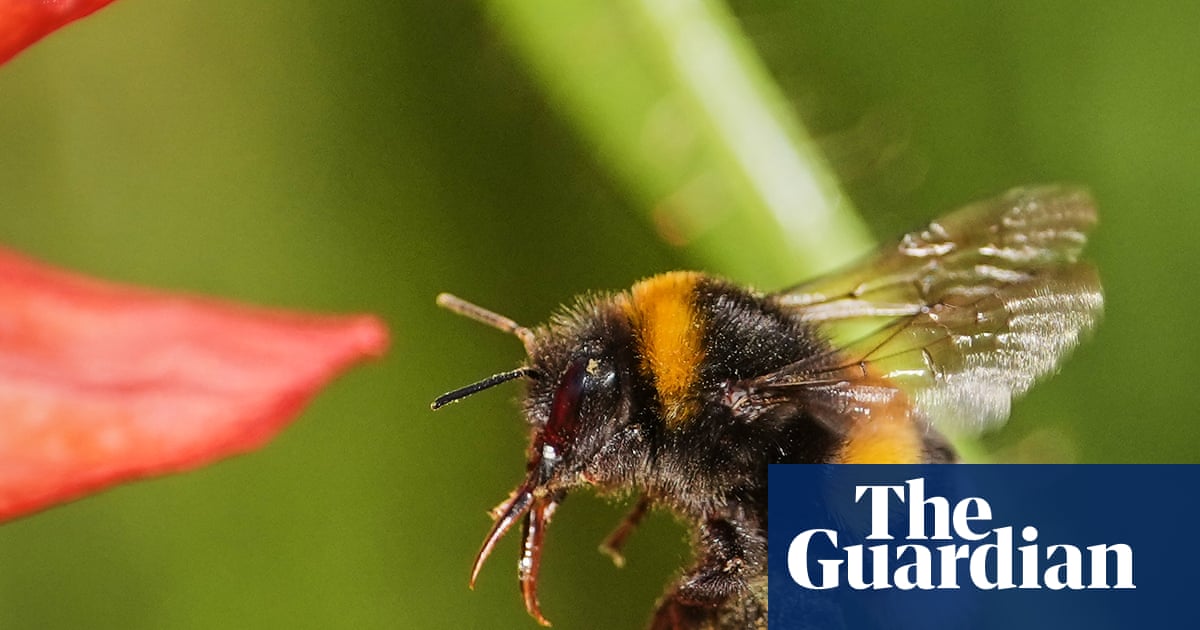
‘They surprise me every time’: bees can use tools to solve problems, study finds

via The Guardian by Hannah Devlin Science correspondent

1673.jpg?width=1200&height=630&quality=8

Insects join list of species capable of solving simple ‘box-and-banana’ problem that demonstrates basic intelligence

Bumblebees can use tools to solve a problem, according to experiments that demonstrate their remarkably advanced cognitive abilities.

The bees were given an adapted version of an experiment that, 100 years ago, first demonstrated chimpanzees could work out how to retrieve an out-of-reach banana by stacking boxes. Since then, various other primates, elephants and crows have joined an elite cohort of species known to be capable of this level of insight and spontaneous problem solving.

Continue reading...

Hundreds of Civil War Soldiers Were Destined to Die. Then, Their Wounds Started Glowing.

e655de99-d493-40c9-91a3-7ca5f4f45adc.jpe

It took 139 years to understand what caused the mysterious “Angel’s Glow” at the Battle of Shiloh.

Wednesday, June 3, 2026