OpenAI says one of its internal systems has found a finite-time singularity in the three-dimensional Navier–Stokes equations, potentially resolving one of mathematics’ seven Millennium Prize Problems.
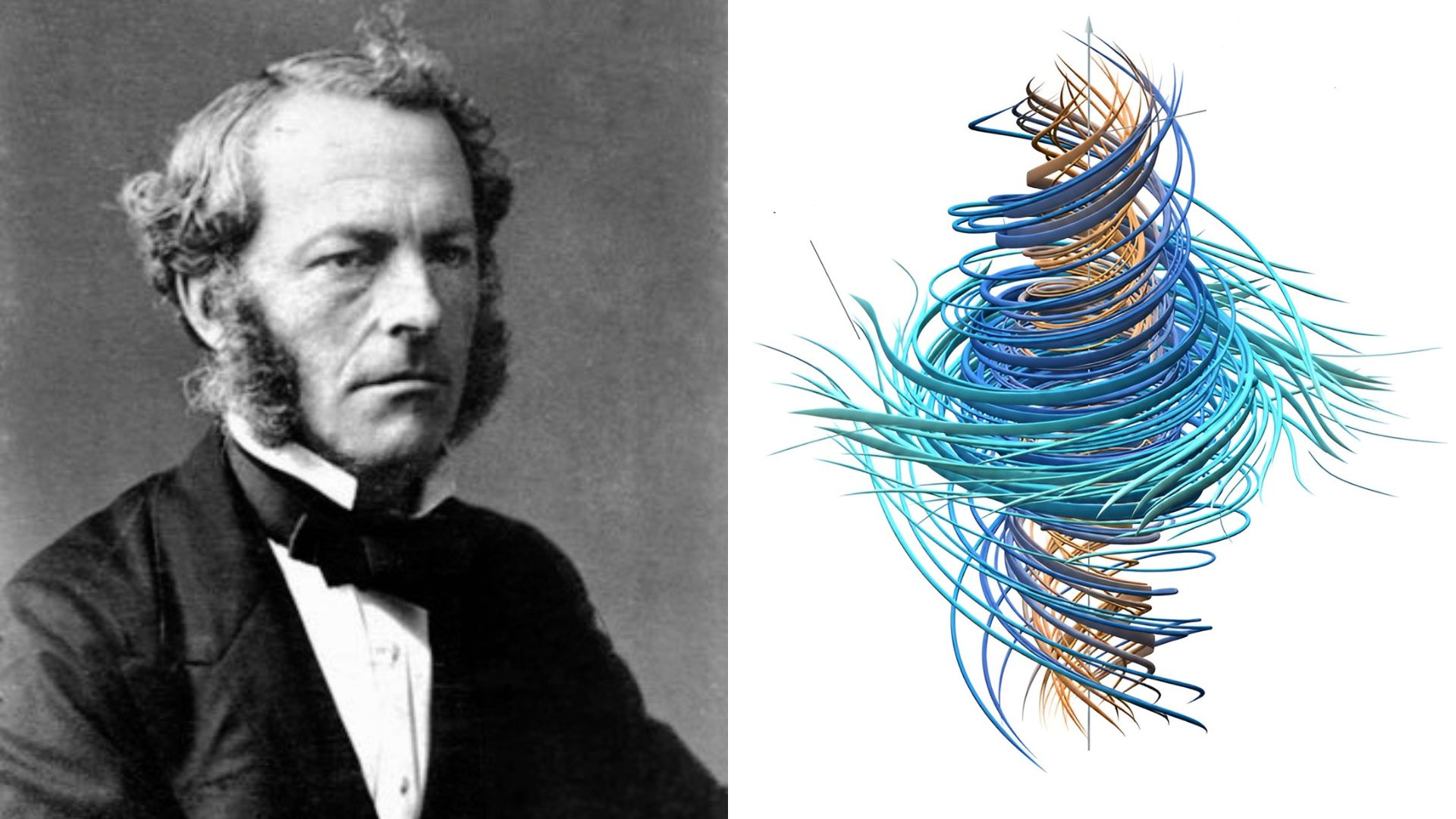
The result describes a fluid that starts smooth and at rest before a vortex collapses inward. Its core stretches and accelerates until velocity becomes unbounded, yet the system keeps its total energy finite.
That combination makes the proposed solution striking. The equations must produce their own breakdown despite viscosity, which normally smooths violent changes in fluid motion.
Vortex becomes the problem
Picture a spinning column of fluid being pulled tighter and longer as it rotates. The central region keeps shrinking, concentrating motion into an increasingly small area.
Eventually, velocity blows up within a finite time. OpenAI says the surrounding mathematics remains controlled enough to keep the fluid’s energy finite.
The difficult part lies in making that behavior emerge naturally from the equations. Researchers could not simply introduce an infinite external force and create the singularity.
Near the breakdown, acceleration, pressure gradients, momentum transfer, and viscosity all grow dramatically. They also cancel with enough precision to leave a smooth external force.
That balance gives the result its physical character. The singularity comes from the dynamics of the fluid itself.
Navier–Stokes has resisted this kind of proof for generations. Jean Leray showed in 1934 that generalized solutions exist, but mathematicians never established whether smooth solutions must remain smooth.
10,000 agents attack math
OpenAI did not arrive at the result through a single model producing a lucky answer. The company assembled a large network of agents and gave different groups different versions of the problem.
The effort began September 1 after researchers heard rumors about major mathematical problems being solved. Groups pursued competing outcomes, including possible breakdowns.
We’re sharing a solution to the Navier-Stokes Millennium Prize Problem, one of the deepest problems at the frontier of mathematics.
The proof was produced by a group of agents, using an OpenAI next-generation model significantly more capable than GPT-6 Astra.
At its peak, the Navier–Stokes effort involved roughly 10,000 concurrent agents. They could run code and read cached internet material inside isolated environments.
An earlier result helped point the search toward fluid singularities. Almost 100 agents spent about 50 hours solving an unforced version of the Euler equations’ regularity problem.
Researchers fed that result into the Navier–Stokes effort, with Codex helping consolidate useful ideas between agent groups.
The agents reached their result on September 5, about 88 hours after the project began. GPT-6 Astra then spent another 17 hours formalizing and checking the proof in Lean. The Navier–Stokes work involved 2.7 million messages and roughly 130 billion output tokens.
Proof still needs mathematicians
OpenAI is not claiming the $1 million Millennium Prize. It released the proof and its Lean formalization as evidence of advancing mathematical capabilities.
Mathematicians still need to inspect the argument and determine whether it meets every requirement of the official problem. OpenAI also disclosed separate work by Levent Alpöge and NYU mathematician Tristan Buckmaster on forced Euler equations.
If the proof survives expert review, it would show that a machine-directed mathematical search can uncover a mechanism that has eluded researchers for 90 years. A vortex tightens, stretches, and accelerates until the equations can no longer keep its velocity finite.
Surgeons aided by real-time analysis of camera footage that identified critical anatomy in brain to be avoided
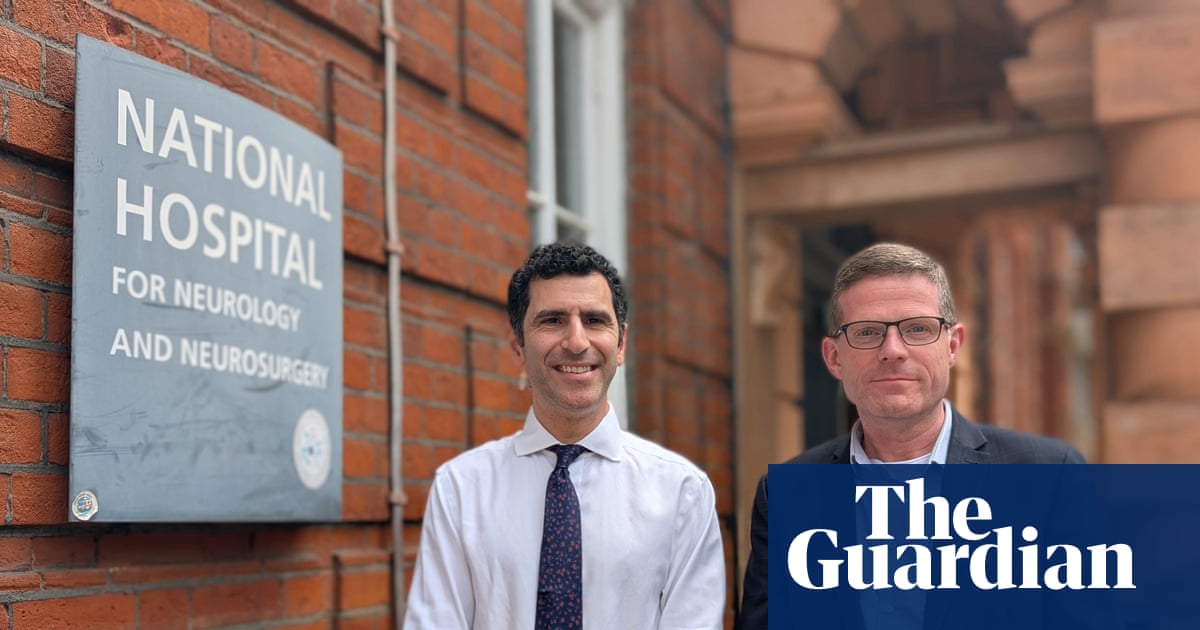
Neurosurgeons in London have performed the world’s first successful AI-assisted operation to remove a brain tumour, saving the sight of a 48-year-old man, health officials have said.
The surgery was performed in May at the National Hospital for Neurology and Neurosurgery (NHNN), part of University College London hospitals NHS foundation trust, but details were kept secret until Thursday while the patient, Rhys Hibbert, recovered.
Fifty years ago this month a new band recorded their first ever demos at Fairview Studio in Willerby after emerging from Hull’s clubland.
They would later achieve chart success on both sides of the Atlantic, while their keyboard player became one of the world’s top songwriters.
Yet today they’re absent from Ed Ullyart’s otherwise excellent Clumber Street mural depicting famous historic faces from Hull’s music scene, and missing from Steve Mathie’s legendary local Hall of Fame at his Spin It Records stall in Trinity Market.
In fact, the story of how the late Rod Temperton and pioneering soul funk band Heatwave came to adopt Hull as their home city remains largely untold until now.
Over a decade first Rod and then the multinational group he played with became familiar faces around Hull until the hit single Boogie Nights and a link-up with Michael Jackson would change their careers forever.
PIONEERING: Rod Temperton, left, with soul funk band Heatwave
Born and brought up in Cleethorpes and Humberston, music was in his blood. As a child he played along to the BBC TV test card on a set of drums. Later at school he formed his own band and even re-wrote some of the traditional hymns sung at a local church.
His first job was as a trainee computer programmer at fish firm Ross in Grimsby but within a year he moved to Hull to become a full-time musician.
In what must have been quite a step for an 18-year-old, he teamed up with John Parker – a friend from his school days – in The Hammer, which had evolved from an earlier Hull group called Roger Bloom’s Hammer.
Having switched from drums to keyboards, Rod, and his Hammond organ nicknamed Betsy, moved into a first-floor flat in Anlaby Road as the group began touring both in the UK and Europe.
Hull-based entertainment agency boss Peter McLeod became the new-look band’s manager and agent after being the drummer in the original Hammer.
“When Rod joined there was a big change in the music because they dropped all the soul stuff they had been doing previously,” said Peter.
“They still did a fair amount of pop but Rod was into some of the more far out material – Hawkwind, Soft Machine, that sort of thing. He brought that sort of music into the group.
“It worked well and they became very popular in Denmark. We sent them back there repeatedly and we had them in Sweden, France and Germany too.
“It was a little bit more difficult to book them over here because there wasn’t really a particular slot for them.”
Being full-time musicians, the band members were nearly always skint. In a 1981 interview, Rod recalled his days with the band in Hull.
MODEST: The Anlaby Road flat where Rod Temperton lived alongside a ‘terrible smell’
“My earnings averaged £5 a week of which half went on rent. The owner of a nearby Chinese takeaway, who had thoughts of backing us financially, used to give us a daily free meal. In the winter I would huddle in a mattress in my room to save on heating. This lifestyle lasted four years.”
His Anlaby Road flat became almost legendary, mainly because apart from a bed and Betsy the organ it was largely devoid of any other furniture.
Hull musician Peter Green remembers another quirk about the flat: “There was always a terrible smell. It wasn’t Rod’s fault because it was from a pet shop next door.”
To earn extra money, the band split into three different outfits while Rod worked as a DJ at the Flamingo, a notorious late-night coffee club in Londesborough Street.
When not performing, he would develop what became a lifelong habit by locking himself away in his flat to write new songs.
MANAGER: Entertainment agency boss Peter McLeod
Peter McLeod: “Rod could disappear for days with the songwriting and was absolutely assiduous with it. He used to stay up all night writing through until the next day. His total concentration was on his songwriting.”
The Hammer’s style of progressive rock wasn’t for everyone – even their own agent.
“To be honest, it was pretty much all over the place but I don’t mean that in a scattergun way,” said Peter.
“They were very eclectic with the musical paths they followed. It was mainly semi-futuristic rock and the lyrics weren’t what you might have expected from normal pop groups. The songs were quite lengthy and it wasn’t terribly commercial.”
Keith Herd. who founded Fairview Studio, recalls Rod being at “rock bottom” when working at the Flamingo.
“He would often come along to our gigs as he had nothing much to do because The Hammer weren’t getting regular work.
“I knew Rod was writing songs and I offered to record a selection so he could submit them to record companies. It was the usual agreement – we did the recording for free of charge and got paid if a record deal came out of it.
“We recorded five tracks with Rod singing but he didn’t have a very good voice so I suggested the singer in my band, Johnny Small, record them instead. The vocals were much improved and Glen Petty, who played drums in my band and was a friend of Rod’s, suggested we all take them to the powers that be in London.
“We used Glen’s dad’s car for the journey and hawked them around for a few days before setting off home. It hadn’t been an encouraging trip and it got worse when the car’s engine blew up spectacularly on the M1.”
A second crack at securing a record deal came courtesy of interest from DJM Records, whose founder Dick James was the publisher of The Beatles’ song catalogue Northern Songs.
This time, The Hammer were invited to record an album’s worth of songs at the company’s expense with an option of a contract to follow.
NOTORIOUS: The Flamingo Club in Londesborough Street where Rod Temperton worked as a DJ
“We spent a number of weeks in studio number two, Denmark Street in London, recording Rod’s original compositions and there was great deal of excitement from Dennis Berger who was producing the album,” said Peter.
“Everything seemed to be going absolutely dandy but in the next studio there was a chap called Reg Dwight who was also busy recording. He was the house songwriter and pianist at DJM.
“His material came to fruition at the same time as The Hammer’s. There was a big board meeting and Dick James gave the news that they really only had the budget to promote one new album from a new act and it was going to Reg.
“Reg, of course, became Elton John and the rest of that story is well known. As for The Hammer, we were left with some excellent tapes but no ongoing deal.”
Eventually, The Hammer would go their separate ways and Rod joined a band with an established residency slot in a city called Worms near Frankfurt.
He later recalled: “I answered a music paper advertisement to join a band called Sundown Carousel. They didn’t speak English and I didn’t speak German but we communicated well enough for the eight hours a night we were on stage.”
The residency finally provided a steady income for the aspiring songwriter who had been living on a shoestring since The Hammer’s demise, but another music paper ad would ultimately bring Rod back to Hull, this time with a new band and a dramatic change of musical direction. The Heatwave era was about to begin.
Next month: From The Trog Bar to Top of the Pops: How Rod Temperton and Heatwave conquered the charts
In the village of Bellewstown, about 15 miles north of Dublin, Ireland, they still talk about what Barney Curley did back in 1975. It all happened during a horse race on the Hill of Crockafotha. It was just an amateur jockey race on a lazy summer day in a sleepy, remote town; it wasn’t meant to be anything special. The last thing anyone expected was to witness the making of history.
The race in question occurred on 26 June 1975. Barney Curley–our protagonist, if you could call him that–owned one of the horses running later that day. But at the racecourse, as preparations were being made, Curley was nowhere to be seen. And not because he wasn’t in attendance–it was because he was taking great pains to stay out of sight. If the trackside bookmakers caught wind that he was at Bellewstown that day, or if they discovered that he was the owner of one of the horses, they would be on full alert, and take precautions with the wagers and odds. Curley had earned a reputation in horse racing circles–he was known to engage in some gambling shenanigans from time to time. But the shenanigan he was planning that day was his most ambitious to date, hands-down.
As the spectators placed their wagers and settled in around the edge of the track for a pleasant afternoon of laid back horse racing, Curley was concealed in the thicket of gorse shrubs in the center section of the oval-shaped track. This particular infield wasn’t ideal for human occupation, it was all dust and thorns. Nevertheless he stood in his trademark felt fedora, shrouded by tall shrubbery, far from the other spectators, a pair of binoculars pressed to his eyes.
In the distance the loudspeaker announced, “They’re off!” Curley tugged his hat down tight over his bald head as if he could hide inside of it, and peered through his field glasses toward the rumble of horse hooves. In the next five minutes, if everything went according to plan, all of Barney Curley’s considerable money troubles would be over. If the plan went sideways–if his animal was not up to the task, or there was one inopportune stumble–he would be utterly ruined.
Julie Elie worked out how zebra finches announce who they are, what they are doing and use individual signatures
A scientist who decoded the vocalisations that a bird uses to communicate has won a $100,000 prize for making progress towards a world in which humans can talk to the animals – without being met with a blank response.
Dr Julie Elie at the University of California, Berkeley, was awarded the 2026 Coller-Dolittle prize for two-way interspecies communication after working out the 11 core calls in the zebra finch vocabulary and their meanings.
People assume that those with facial hair are more likely to harbour bacteria on their faces than the clean-shaven – but the truth is more tangled
The idea that beards are dirtier than clean-shaven faces has been floating around for decades, says John Tregoning, professor of vaccine immunology at Imperial College London. There is even research that shows people perceive bearded men as less hygienic: one study found restaurant customers rated waiters with facial hair as dirtier. Science doesn’t necessarily back that up, though.
One of the earliest studies on the subject, published in 1967, looked at how much bacteria could be recovered from men’s faces after being artificially sprayed on to their skin. Researchers compared washed and unwashed faces, both with and without beards. The dirtiest combination wasn’t with a beard: most bacteria was recovered from unwashed clean-shaven faces, followed by unwashed bearded faces, washed bearded faces and finally washed clean-shaven faces.
Scientists are examining how ‘blood rain’ affects soil microbiome, with Portuguese vineyards a particular focus
Dust events, when thousands of tonnes of fine sand whipped up from the Sahara are dumped over Europe, are becoming more intense. These sometimes produce “blood rain” that leaves visible red streaks, and while generally harmless, the dust is not sterile but brings a freight of microorganisms.
One big concern is how imported microbes may affect the soil microbiome and impact agricultural fertility and crop yield. Southern Portugal lies along one of the main deposition routes for Saharan dust, and the effect on vineyards in particular is a growing concern. A team from the University of Lisbon carried out genomic mapping of microbes in dust samples from 2022’s Storm Celia.
Michael Joncas wrote "On Eagle's Wings" during a moment of private grief. Five decades later, the hymn has become one of the most recognizable religious songs in the English-speaking world.
Once a year, Dutch kids, parents and teachers take part in a walking festival, heading out for four nights in a single week to explore their neighbourhoods, exercise and make friends. It’s a tradition that seems to be genuinely transformative
I shouldn’t have been surprised that the rain didn’t stop the Dutch kids. All day it had been thunderstorming, and the forecast didn’t look so great for the evening. And yet at 5pm, hundreds of kids started arriving – many by bike – with their parents to Amsterdam’s Westerpark, a beloved city park that caters to a more residential area of the capital. Today, it functions as a starting point: volunteers coordinate registration, and groups of children gather, decked out in raincoats and eager to embark on either a 5km or a 10km excursion around the surrounding neighbourhoods.
It’s the second night of Avondvierdaagse (which literally means “four-day evening walk”) , organised by a group of neighbourhood volunteers. It’s not a race, but if children complete every night, they get medals, a bouquet of flowers and, if they’re lucky, a lot of sweets. It’s not just Amsterdam; across villages, towns and cities in the Netherlands, hundreds of thousands of Dutch people are doing the same: every year, kids spend four evenings in early summer exploring their neighbourhoods with their school friends and parents as part of the Week van de Avond4daagse. Some places had celebrated earlier; others were walking the following week. A variation of the tradition has even made its way to Suriname, one of the Dutch former colonies. There are also four-day cycling and swimming events. According to the Royal Dutch Walking Association (KWbN), which helps coordinate the events, half a million people take part every year, in 700 locations across the country, powered by tens of thousands of volunteers.
Amazon says its datacenters used about 2.5 billion gallons of water last year, but claims that's far less than rival hyperscalers and that it remains on track to become "water positive" by 2030. In a blog post, the digital tat bazaar and cloud computing biz says the 2.5 billion gallon figure covers its entire global datacenter footprint for 2025. It downplayed the number by comparing it to the volume of water Americans - a country of 350 million people - used on lawns and gardens over the same period. Amazon disclosed water usage of 0.12 liters per kilowatt-hour (L/kWh) at its data facilities, and claimed Microsoft used 0.27 L/kWh during 2025, while Meta's consumption stood at 0.19 L/kWh in 2024 and Google was the thirstiest at 1.15 L/kWh during the same year. The Register has asked Microsoft, Meta and Google to comment. The water usage, we're told, is 75 percent of the way to Amazon's goal - announced in 2022 - of being "water positive" by 2030. It means facilities return more water to the environment than they consume, via measures including rainwater capture or other treating waste water for reuse. The figures come amid growing pushback against datacenter construction in the US. A recent Ipsos survey found most Americans don't want facilities built nearby, citing worries over electricity prices, eyesore buildings, and water-hungry operations. This echoes a 2022 report that found Google datacenters were consuming more than a quarter of all the water used in The Dalles, Oregon. Or, if you'd rather not to blame the industry itself, you could go with the line that Chinese operatives are spreading propaganda over social media, a claim that OpenAI and other interested parties are keen to promote. Whatever the cause of the backlash, the underlying numbers are real: datacenter water use has been climbing for years, driven by the sheer growth in facility numbers and by AI servers, which run hotter and demand more cooling than traditional kit. Water consumption at Microsoft's facilities surged 34 percent to 6.4 million cubic meters in 2022, for example, with generative AI blamed. Making matters worse, many datacenters now in the pipeline in the US are slated for areas already experiencing drought, according to analysis by The Guardian newspaper. Amazon says that its facilities use "free air cooling" about 90 percent of the time, pulling in outside air and flowing it past servers to absorb the heat, with no water involved - though it does resort to evaporative cooling during the hottest weather. But as The Register outlined last year, kicking the water habit completely will be nearly impossible, regardless of what claims the operators may make. ®
Intricate tests show hair-trigger detection causes cells on outer surface of leaf to soften, prompting closure
The Venus flytrap is one of nature’s most impressive predators, luring insects with the intoxicating scent of nectar before capturing them with a snap of its jaw-like leaves.
Now, scientists have revealed the mechanism that allows the carnivorous plant to react with lightning speed, resolving a problem that stumped Charles Darwin and many researchers after him.
First ever global mapping of arbuscular mycorrhizal fungi shows scale of hyphal systems that sustain plant life
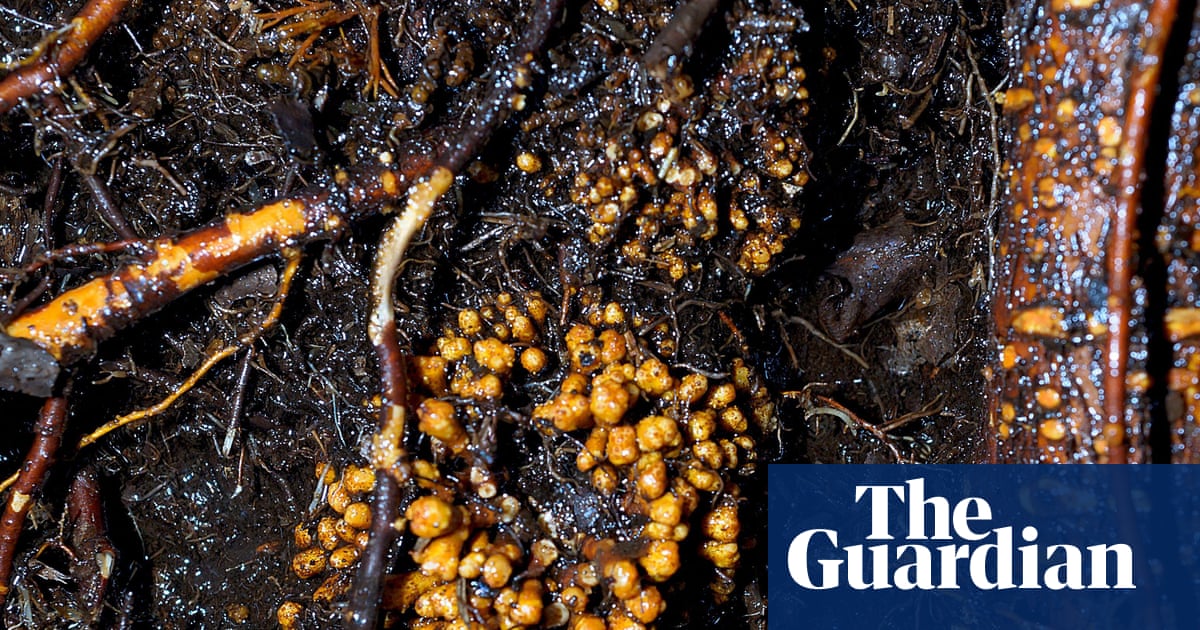
Our planet’s soils contain enough of the subterranean fungi that sustain plant life and help regulate the climate to stretch from the Earth to the sun almost three-quarters of a billion times, a groundbreaking new study has found.
Arbuscular mycorrhizal fungi are networks of tubular cells called hyphae that sustain life on Earth by forming critical partnerships with more than 70% of plants. The networks, which have been forming for about 475 million years, provide nutrients and water in exchange for the carbon produced by the plants, and help to regulate the climate by drawing carbon into soils.
Insects join list of species capable of solving simple ‘box-and-banana’ problem that demonstrates basic intelligence
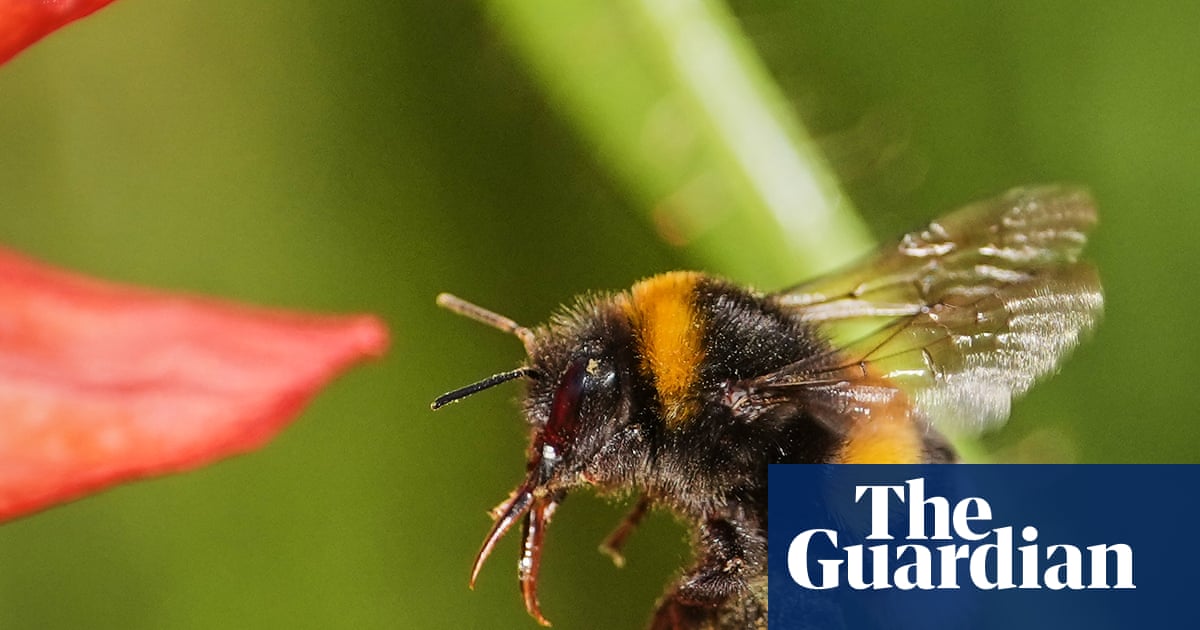
Bumblebees can use tools to solve a problem, according to experiments that demonstrate their remarkably advanced cognitive abilities.
The bees were given an adapted version of an experiment that, 100 years ago, first demonstrated chimpanzees could work out how to retrieve an out-of-reach banana by stacking boxes. Since then, various other primates, elephants and crows have joined an elite cohort of species known to be capable of this level of insight and spontaneous problem solving.
The exploit, dubbed CopyFail and tracked as CVE-2026-31431, allows hackers to take over PCs and data center servers. The Linux vulnerabilities have been patched—but many machines remain at risk.
As adult riders report new age-verification checks, the self-driving car company says it’s continuing to “refine” its system in places where kids aren’t allowed to ride alone.



 In the distance the loudspeaker announced, “They’re off!” Curley tugged his hat down tight over his bald head as if he could hide inside of it, and peered through his field glasses toward the rumble of horse hooves. In the next five minutes, if everything went according to plan, all of Barney Curley’s considerable money troubles would be over. If the plan went sideways–if his animal was not up to the task, or there was one inopportune stumble–he would be utterly ruined.